At Road Trips

Two months ago, my friend Alyssa asked me if I would go with her from our tiny town in Florida to her tiny hometowns in Kansas and Missouri. The drive was roughly 18 hours each way, including stops; on the way up we stopped at a hotel in Nashville, but for some reason we decided it would be better to just do the trip home in one straight shot.

After twelve hours of the car getting steadily hotter and stickier, we realized that we were idiots.

“Oh my God, I want to cry” is not normally the first thing I say when I walk into a Panera Bread. It’s probably not the first thing anybody says when they walk into a Panera Bread, which is probably why the cashier in Olive Branch, Mississippi, treated me so gingerly while I ordered my sandwich, but I couldn’t help it; it was the first air conditioning I’d experienced all day since leaving Missouri in Alyssa’s 15-year-old car, Marv.

If you’ve never driven through the entire state of Mississippi with no functional A/C, you should know that it’s not something I recommend.

You should also know that the time I did that was totally worth the sweat, because it was the time that I returned from the best two weeks of my entire life. I met new friends, I did some shopping, I got unbelievably borderline-Siamese-twin close with Alyssa and I learned more than I ever thought it was possible to learn in a two week vacation. (In Holden, MO, there is a Pizza Hut in the middle of a cornfield. Just picture that for a sec.) Even so, I think one of the best parts of that trip was the actual traveling—the day and a half, total, that it took Alyssa and me to get there and back.

What’s funny about really long road trips is that on paper, they look like a terrible idea. Being stuck staring straight ahead in a tin can with the same person or people for hours or even days at a time shouldn’t be fun, particularly if you add in limited bathroom access and late June southern humidity. However, something about the small space and the rush of seeing unfamiliar territory rush by your window is… well, magical. People open up. Minds expand. Friendships grow. It’s dangerous and uncomfortable and expensive and you should totally, totally do it.

Of course there are safety rules to follow, but we’re not going to cover those today. You can read about them here. What we’re going to discuss are the plethora of non-safety related pitfalls that your road trip can fall into: hunger, boredom, and crabbiness are just a few. Here’s how Alyssa and I avoided them while we were Thelma and Louising it through the American Midwest.

What is not sucking? In the realm of extended vehicular travel, not sucking is defined as making it from your point of origin to your destination, not only without dying or killing your fellow passengers, but while having fun along the way.

This is what hair looks like when you're having fun. 1. Gather provisions. Get some water bottles—they’ll keep you hydrated and make sure your skin doesn’t break out on the road. Everything else is up to you. Try to get an even balance of sweet and salty, unless it’s summer and your A/C is broken, in which case anything with high sodium is counterproductive. Check with your fellow travelers if you’ve got an affinity for snacks with strong smells (sorry about the salt and vinegar chips, Alyssa).

2. Roll the windows down. I love air conditioning as much as the next girl—maybe more. However, road trips are way more interesting when you’re relying on fresh air to stay cool. Listen to the wind. Figure out what a river smells like. Stick your hand out the window and do that wavy-arm thing. Experience the world outside your car.

3. Select your soundtrack carefully. Tunes are the number one most important thing to bring with you on a road trip… besides, you know, a valid insurance card. Happy, bouncy, danceable stuff is best, but there’s also a place for quieter, more pensive music while traveling. Read the mood in the car and DJ accordingly, or use an app like Songza that provides you with lists of potential playlists just for driving. (The pure organizational nirvana of this app makes it maybe my favorite ever.)

4. Stop where it looks interesting. On your way back from wherever you’re going, nobody will blame you for just trying to get from Point A to Point B as fast as possible, particularly if you’re driving through the entire state of Mississippi with no air conditioning. However, on your way to your destination, take some time to pause at the places that catch your eye. Some of my best travel memories happened during the interlude between point of origin and destination, and they were almost never planned. America is full of weird stuff—enormous versions of everyday objects; tiny, oddly specific museums; restaurants that claim to be “international” because they serve fried chicken next to “Italian” marinara sauce and “Chinese” sweet and sour sauce on a buffet. Embrace the weirdness. You’ll end up with good stories.

5. Go with people you love. A road trip by yourself is just a commute. What makes long-distance car travel so memorable, so joyful, so… fun are the companions you choose, and the new ones you find along the way.

Shout out to my new friends in Missouri and Kansas! If you’d like to share some of your favorite road trip memories with me, visit this blog’s page on Facebook or follow me on Twitter

At Going to the Beach

This is it: the best part of my hometown. Photo courtesy of TripAdvisor.

I grew up in a tiny town on the Gulf coast of Florida. It’s not on many maps and unless you grew up there too, you’ve probably never heard of it. However, the one claim to “fame” that my hometown has is well worth living 20 minutes away from everything: we have some really excellent shorelines. Sugar-white sand, clear water, relative quiet compared to Panama City and Pensacola—we’ve got it all.

When I’m home and I have a free day, going to the beach is my favorite thing to do, mostly because it’s the only thing to do. I show up with a stack of magazines, a water bottle and some tunes and spend a few hours trying to go from paper-white to off-white. If I get hot, I take a dip; if I get hungry, I walk up the boardwalk stairs and get a grouper sandwich. My beach chair and towel sometimes don’t leave the back seat of my car for months at a time.

Maybe you’re not as in love with the beach as I am. Maybe all your seaside memories involve sand in your suit, awkward body image feelings and creative, disgusting cures for jellyfish stings—not to mention sunburn. That’s okay. Beaching is a skill that has to be learned; I just got most of my waterfront horror stories out of the way early. In honor of the beginning of June, here are some ways to make sure your future coastal sojourns don’t suck.

What is not sucking? Not sucking is defined in the realm of beach-going as preparing adequately for a pleasant time somewhere with sand and water, in such a way that a trip to the hospital (or even the pharmacy) is not necessary later.

  1. Dress right. Choose a bathing suit that makes you look and feel hot. If you feel self-conscious in it, it belongs on the rack, not on your body. While you’re out shopping, get some sunglasses. You don’t need expensive ones—just make sure they offer UVA/UVB protection. In the same vein, get yourself some sandals that are substantial enough to keep the asphalt in the parking lot from burning your feet, but not expensive enough that you’ll care if the sand tears them up.
  2. Ditch all your screens but one. You know you need SPF all the time, and that it’s especially important on the beach. However, sunscreen should be the only screen you bring to the seashore; your phone, your tablet, and your laptop will be waiting for you at home when you get back.
  3. Bring two towels. One to sit on, one to dry off with. This minimizes your chances of driving home with sand in uncomfortable places. I learn things the hard way so you don’t have to.
  4. Read trash… or at least fluff. Airports and the beach are the only two places in the entire world where you can indulge in intellectual cotton candy and nobody will judge you for it. A trip to the beach is not the time to introduce yourself to Tolstoy or Voltaire. Buy OK! or People or GQ or a novel by Emily Giffin or James Patterson. And if you get bored while you’re reading, just…
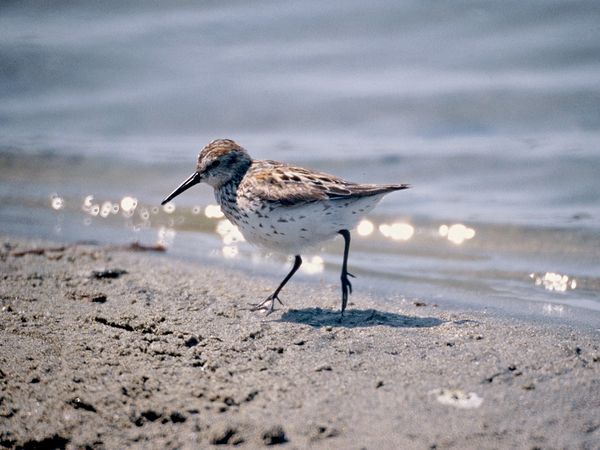
  5. They're funny little guys. Photo courtesy of National Geographic.

    They’re funny little guys. Photo courtesy of National Geographic.

    Watch. Have you ever really looked at a sandpiper? They run right up to the edge of the water to snack on whatever it is they eat, and then the moment a wave comes up they run away like they weren’t expecting to get wet. And, hey, what about pelicans? Do you know there are people who go their entire lives without ever seeing a pelican?

Oh, and I guess sometimes there are hot people in bathing suits. Where I live, it’s mostly old           folks with metal detectors, but there you go.

  1. Hydrate. Drink water, avoid hospital. It’s that simple.

Enjoy your summer, everybody. If you want to post beach pictures, you’re welcome to do so on Facebook or Twitter.

At Selling Stuff

Hello, my dears!

I know what you’re thinking. It’s been more weeks than I can count on one finger since my last post, and that is entirely too long. All I can say is that finals week kicked my butt. And then I had to pack. And then I moved home for the summer and started working and… well, in other words, I have no excuse for waiting this long between posts and I am sorry.

Friends?

Good.

If you sell faulty used cars, you might get a hat superglued to your head. Still from Matilda. Image from villains.wikia.com.

If you sell faulty used cars, you might get a hat superglued to your head. Still from Matilda. Image from villains.wikia.com.

Anyway, now that college is over for four months, I’m back to my old job in retail. Some of my duties include setting up displays, cleaning bathrooms and babysitting (PSA: parents, please keep an eye on your children when you’re out in public together). However, most of what I do is sell stuff, and I enjoy that part of my job far more than I ever imagined I would. I always thought sales was about sleaze and trickery and schmoozing—convincing people, Mr. Wormwood-fashion, to give you money for something they don’t actually need. If you’re working for the wrong company, it can definitely be like that, I’m sure, but sales doesn’t always have to be about pushing a faulty product down someone’s throat. In today’s world, we all need sales skills, even if we don’t necessarily use them to make a profit. Sometimes, the thing we’re selling isn’t a product or service, but an idea that we’re trying to convince someone to believe in. Every now and then, especially during a job search, we’re selling ourselves—trying to convince someone else to believe in us enough to pay us to do stuff.

Maybe you don’t actually want to work in sales. Maybe you’re not great at selling stuff. That’s okay. However, regardless of your actual job title, you need to be decent at getting people to agree with you. That is basically all a sales pitch is: saying “You need this thing” and then giving a coherent list of reasons why until they think so, too. A job interview, in much the same way, is looking at a potential employer and telling them why they need you to work for them.

Hey, look. I think I just sold you on the idea that you need sales skills. Neat, right? Here’s some ways to be okay at doing what I just did:

What is not sucking? Not sucking, in the world of sales, is defined by being able to get people to buy your product, agree with your idea, or hire you on a reasonably regular basis while telling only the truth.

  1. Sell to the person in front of you. Maybe what you’re selling has the potential to benefit a really huge group of people. Maybe your product could end world hunger; maybe your idea could revolutionize scientific/political/culinary thought forever; maybe you’d be a fantastic addition to whatever company was lucky enough to hire you. If that’s the case, awesome, but if  you make your pitch too broad, your customer, whether they’re an HR rep or a tired mom who just wants to pay for her groceries and go home, will lose interest. Make whatever you’re selling sound useful to the specific person with whom you are speaking at the moment, and they’ll be more likely to buy it from you.
  2. Talk up the good points. This sounds obvious in a retail or sales context, but in the context of a job search it can be easy to forget. “What are your strengths?” is an important question, and one that can be asked in myriad different ways; you need to have an answer for it, and you should probably give part of that answer before your interviewer even asks the question. No matter what you’re selling, you need to introduce your product/idea/self with its three best qualities right off the bat. These should be things that, as mentioned in #1, will be the most helpful to your specific customer. Any less than three and the customer won’t be convinced;any more too soon and they’ll think you’re bluffing.
  3. Acknowledge the catch. By this time in the economic recession, everybody you attempt to convince to buy your
    This is not acknowledging the catch. Meme from compellingmomentum.wordpress.com.

    This is not acknowledging the catch. Meme from compellingmomentum.wordpress.com.

    product will be intimately familiar with the phrase “There’s no such thing as a free lunch”. Even if what you’re selling doesn’t cost money, your customer will probably pay with their time, their information, their frustration or in some other way. Acknowledge that your product will cost something or your customer will be rightfully skeptical. (This point goes along with another popular interview question: “What are your weaknesses?” Believe it or not, employers want an honest answer to this one, too. “I’m too perfect” does not count.)

  4. …and make it clear your product is worth it. Sandwich your product’s cost in between its major benefits and its redeeming qualities. Maybe a club membership that costs a little extra money now will save your customer money in the long run. Maybe you learned a valuable lesson after getting fired from your first job and now have wisdom that could make your next place of employment even better. Maybe your dragon’s blood has a terrible smell, but 12 spectacular uses (Dumbledore approved!). However, to make these redeeming qualities sound believable, you have to…
  5. Believe in your product. Good salespeople never lie. The only way to effectively sell something in a way that creates a trusting, mutually beneficial relationship between you and your customer is to tell the truth, and that requires a little moral fortitude on your part. Only sell something if you believe it will benefit people. If you ever find yourself in a situation where this isn’t the case, either change your product or sell something else. You deserve better, and so does the world.

Go get ’em, tigers. If you want to hang out with some people who don’t suck at stuff, go like this blog on Facebook and follow us on Twitter @hownottosuckblg (no, no o in “blg”. Vowels are overrated). It’s good to be back–I love you guys!

At Hanging Out With Yourself

The ability to spend time unattended without freaking out about it is an essential skill regardless of your relationship status. I know it’s clichéd and all of you are going to groan when I say it, but if you can’t be happy with only yourself, you’re never going to be happy with anyone else—friends, partners, coworkers, rodeo clowns, whoever. The problem with that is that being alone for any reason has a negative connotation in our society. Have a look at the thesaurus.com entry for the word “alone”: suggestions for alternate words include “abandoned”, “forlorn”, “desolate” and even “widowed”. It’s as though being alone for any length of time is something tragic, as if the only people who would choose to be by themselves are people who have no other option.

When I was in preschool, my teachers called my parents because they were deeply concerned about my social capabilities: instead of eating snack at the table with the other kids, I elected to munch graham crackers on the floor by myself. This early propensity toward independence continued through high school. I had a few close friends, but I needed lots of alone time to focus on forming strong relationships with fictional characters. I wasn’t antisocial (see definition of that word here). I just got my energy from talking to myself rather than from talking to others.

My freshman year of college changed all that. I met hundreds of people, forged great friendships and tried all kinds of new things (all of which were legal, thankyouverymuch). Between my dorm, class, the dining hall and various weekend activities, I was almost never alone.

Read that sentence again. I. Was. Never. Alone.

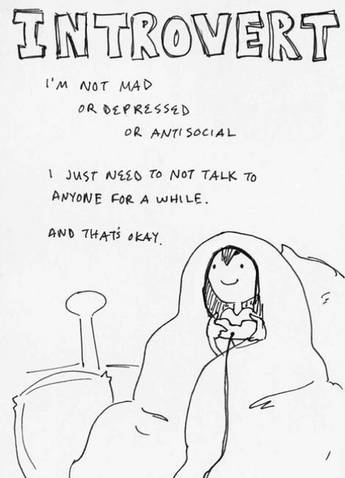
Preach, sister. I sure wish I knew who made this, 'cause I didn't. Anybody know?

Preach, sister. I sure wish I knew who made this, ’cause I didn’t. Anybody know?

In the space of a year, I went from being a relatively socially able kid who spent most of her time reading books, listening to music and writing down everything that came to mind, to being an adult with a fantastic social life but few internal resources. Hanging out solo for too long began to make me seriously uncomfortable, and I was not okay with that. Everybody needs to be alone sometimes. Being able to entertain yourself is a skill born out of self-reliance, not social catastrophe. With that in mind, here’s a guide not to being sad and lonely by yourself, but to being happy and relaxing with yourself.

What is not sucking? Not sucking is defined in the world of self-entertainment as being able to amuse oneself for at least two hours at a time without going completely bonkers.

  1. Strip. The best way to begin a hangout with yourself is to take off all unnecessary clothing.At the very least, this means switching to pajama pants, though no pants at all are best if you’re alone in your bedroom or have tolerant roommates. If you wear a bra, it should get gone too.  Don’t bother with that nonsense. Heck, if your apartment is a comfortable temperature, hanging out completely au naturel can be beneficial for your body image. Basically, wear (or don’t wear) whatever makes you feel most comfortable. This time is about you. In that same vein, here’s what you should do when you’re hanging out with yourself one-on-one:
  2. Whatever you want. Wanna binge on Psych on Netflix? Go ahead. Feel a deep need to move your body? Do some yoga (it’s great for your back). Are you a well-read masochist who likes dragons? Consider picking up Game of Thrones. This is your time. Do what makes you happy, do what makes you peaceful, do what makes you healthy. (This is also an ideal time for a nap.) When your apartment ceases to be the place of wonder and magic it used to be…
  3. Put your clothes back on and go out. Ever been to a restaurant by yourself? It’s an intimidating experience at first, but after the initial “‘How many?’ ‘Just one’” awkwardness, it gets to be fun eating all the free breadsticks at once. (People might look at you. Let them. They wish they could be as independent as you are.) Movies are even better; you get to pick what you see, and there’s no jockeying for armrest space. Going out by yourself—as long as you’re reasonably safe about it—can be a really fun way to find out what you like independent of what your friends, family and/or significant other enjoy. One of the best ways to discover yourself is to…

    Giraffes have feelings too, guys. Photo by Tim Cooper copyright 2009.

    Giraffes have feelings too, guys. Photo by Tim Cooper copyright 2009.

  4. Try new stuff. Ever been to that Indian restaurant downtown? Ever seen a foreign film? Ever walked around a zoo and made faces at the animals just to see how they’d respond? No? Try it! (But try the last one at a safe distance from the lions, okay? And keep it in the spirit of fun, not meanness. Giraffes may seem happy-go-lucky, but they’re really rather sensitive.) If you try something new and hate it, you don’t have to suffer through it just to please somebody else. Instead, go try something different until a new interest sticks.
  5. Get stuff done. Responsibility is never more attractive than when it’s your only option for amusement. If you run out of adventures to have by yourself, then clean your room, get ahead in your schoolwork or your job, or call the plumber to come fix your sink. Better yet, Google how to fix your sink yourself.*
  6. Read a book. If you read, you may find yourself alone from time to time, but you will never be lonely.

*I am not responsible for your water/electricity/small mammal-related mishaps. If you and yourself would like to be alone with some other people and their selves, go like The How Not to Suck Blog on Facebook and follow us on Twitter @hownottosuckblg (no, there’s no “o” in “blg”).

At Cooking Pasta

Remember how I was trying to be a responsible, frugal adult and cook as many of my meals as possible? Yeah, that went away. Not only is cooking often really inconvenient, but in the hands of a novice, it can even be dangerous. Long story short, after a little incident with the broiler my apartment complex had to give us a new oven, and for the past month and a half I’ve avoided it after making a solemn vow to live on takeout for the rest of my days.

However, sometimes takeout is also really inconvenient. One of those times happened last week, when I was already in pajamas in my apartment and I got hungry. I didn’t feel like drive-through food, delivery is expensive, and I do have SOME pride, so my only option was to brave the stovetop using some of the groceries my mom bought me the last time I was home for a weekend: pasta and canned sauce.

(What? Are you suggesting that I could have put my bra and real pants back on to go out and get food? Are you insane?)

I was apprehensive at first. After all, I don’t have the best track record with hot cooking appliances—I once started a fire boiling water for macaroni and cheese while babysitting, for Pete’s sake. (No, nothing was destroyed. Yes, firemen came. Yes, it was embarrassing. Can we move on now?)

Nuff said. Image from someecards.com

Nuff said. Image from someecards.com

My pyrophobia notwithstanding, once I got back into cooking it was actually a little… fun. Canned sauce seemed boring, so I threw in some extra green vegetables and some cuttings from my roommate’s windowsill herb garden (again, boys, he’s single), and it turned out surprisingly well. Yes, cooking can be scary and inconvenient, but the good news is that food doesn’t have to be gourmet to be filling. Here’s a “recipe” that will keep you from feeling the kind of desperation that results in re-donning one’s restrictive undergarments to go on a quest for sustenance.

What is not sucking? Not sucking is defined in the realm of cooking pasta as creating a semi-Italian dinner that is edible, balanced and satisfying.

  1. Get your ingredients. Pasta, of course, is essential. Pick whatever shape you want: linguine, spaghetti, angel hair, bow tie (technically farfalle—who knew?), literally any shape but lasagna. Also get some canned spaghetti sauce. No, not Ragu—Prego, Bertolli and Newman’s Own are all great options. For extra credit, get a green bell pepper too—and some fresh basil.
  2. Get two pots. Two small ones if you’re cooking for one, two big ones if you’re feeding lots of people.
  3. Put water in one pot. Fill one of the pots about three-quarters of the way up.
  4. Boil the water. Make sure the burners on your stove are clean. Put the pot on one of the burners. Make sure the burner is clean. Turn on the burner with the pot on it. Make sure that burner is clean. Turn the heat all the way up. I cannot stress enough how important it is that you make sure that the woman whose children you are watching did not forget to take the grease-covered aluminum foil off the burners after her crazy mother-in-law left last week.
  5. What was I saying? Oh yeah. Wait for the water to start bubbling. Don’t put the pasta in when there are little baby bubbles chilling on the bottom—wait until the bubbles are big and active and popping. Throw in some salt if you want.
  6. Dump in the pasta. You can use the whole box even if you’re only cooking for one—that’s why God made refrigerators—but make sure you keep the package. That’s where your pasta-cooking directions are. Turn the heat to medium and let the pasta cook for a few minutes, stirring occasionally. Then…
  7. Put the sauce in the other pot. Put that pot on the stove (after, of course, making sure that all your burners are clean). Turn the heat up to medium. You can microwave the sauce, but it’ll turn out better if you heat it on the stove.
  8. Add your extras. If you had the presence of mind to get the bell pepper, go ahead and chop it into little pieces. You don’t have to do this with the speed and precision of a professional chef—nobody’s watching you, after all, and if they are they can laugh all they want as long as you don’t hurt yourself. Add the pepper to the pot. Do the same with the fresh basil. Stir.
  9. Dump the pasta into a colander. That’s the bowl with the little holes in it that your mom made you buy when you moved into your apartment. Then, put however much pasta you want on a plate and cover it in sauce. Serve with toaster-oven garlic bread if desired.

Don’t forget to turn off your burners—trust me on this one. If you’ve got stories to share that will dissuade me from ever cooking again, go post them on the Facebook page or tweet @hownottosuckblg (no, there’s no o in “blg”). If you’ve got encouragement, I guess that’s okay too!

At Going to Concerts

I was nine when my mom took me to my first concert: Martina McBride’s Christmas show at a stadium in Pensacola. It was hardly wild, but it was still a very cool experience, since Martina McBride sounds fantastic live (tiny woman, huge voice) and she invited all the little girls in the audience to come sit on the stage with her while she sang “In My Daughter’s Eyes”.

I didn’t understand its importance at the time (we were almost late to the concert because I had to finish a very important Neopets battle), but that night was the beginning of my love for live music. A decade later I still love going to concerts, whether the name on the ticket is famous or barely recognizable.

My BFF/sassy motivator Ira and I went to a performance by our favorite band, Parachute, over the weekend (Gavin DeGraw was

The zoom is not on in this picture--that's how close Ira and I were to the stage. Nate from Parachute.

The zoom is not on in this picture–that’s how close Ira and I were to the stage. Nate from Parachute.

technically the headliner, but we were definitely there for the band formerly known as Sparky’s Flaw). We got there ridiculously early in hopes of getting the best possible place to stand, and thus had a lot of time to make friends in line. I was shocked by the number of people my age who said that this was their first concert. Ever. I always knew I was lucky, but I had no idea that so many of my peers had never seen popular music live before. (I qualify this because many of them were music majors who had been to several classical shows.)

That got me thinking about the fragility of the concert experience. Live music is so fun, but there are so many ways that a night that’s supposed to be fun can turn exasperating. Beyond the requisite safety tips, here are some ways to make sure attending your first concert, or any concert, doesn’t suck.

What is not sucking? Not sucking is defined in the world of concert attendance as actually going to see live music without embarrassing yourself or getting injured.

  1.        Release your negativity. You might be under the impression that you can’t afford to see live music. Regardless of your financial situation, you’re probably dead wrong. If you’re at a major university, your tuition could be paying for concerts and other events on campus. In the real world (as opposed to on College Island), local bands will often perform free at bars and restaurants. Even if you do have to pay for a show, if you pay attention and grab tickets early you can usually get them for $30 or less (as long as you’re not trying to see Taylor Swift or the Rolling Stones’ 80th farewell concert). With that in mind…
  2.        Stalk. Follow your favorite bands and artists on all their social media platforms. Same with your favorite local venues. All of these generally post upcoming events and tour dates online, and if you stay on top of your News Feed you might never miss a local performance again.
  3.        Dress right. Concerts are fun. They are also often hot and uncomfortable. Avoid heavy layers, high heels or anything restrictive, especially if you know the show is standing room only. Also, if you’re going to wear a t-shirt advertising your love for a band that is not the one you are going to see, make sure you do your research; music rivalries are serious stuff. You do not want to wear a Police shirt to a Sting concert, a Megadeth shirt to a Metallica concert, or a Justin Bieber shirt… anywhere.
  4.        On time is late. People called me and my friend Ira crazy for showing up to that concert three hours before the doors opened. However, when we finally got up from the asphalt with our legs asleep and our bladders full, we got to stand exactly one person-width away from the stage. Any closer and the lead guitarist would have spit on us while he was singing. (No, seriously. The girl in front of us got spit on. I’m pretty sure she’s never gonna wash her face again.) The people who got there fifteen minutes before the concert started stood at the very back of the second level balcony. Lesson: if you like the band, be willing to suffer a little. The early bird gets to steal guitar picks and set lists from the stage.

    "Nice snag!"--Will Anderson, Parachute's lead singer, while signing my set list (Johnny Stubblefield, the drummer, signed it too)

    “Nice snag!”–Will Anderson, Parachute’s lead singer, while signing my set list (Johnny Stubblefield, the drummer, signed it too)

  5.        Groupie see, groupie do. Just like anywhere, the best way to avoid humiliating yourself at a concert is to do exactly what everybody else is doing and no more. Is everyone standing? Don’t sit. Is anyone singing? No? Then listen to the music you paid to hear. Most importantly, stay in one place as long as possible. However, if you find yourself needing a bathroom or a t-shirt at intermission (or if the crowd starts getting crazier than you’d care to be involved with), then…
  6.        If you have to move, get creative. If music is playing, dance your way through the crowd. If it’s intermission and you have got to get to the merch table before the band leaves, here’s my proven solution: lock arms with a buddy, plow on through and say nice things to people as you pass them (i.e. “Excuse me! Love your necklace!”).
  7.        Bring cash. You can’t always guarantee that a band’s merchandise table will take credit cards. If you feel like you’re going to enjoy the show, stop by an ATM before you get there—and if you want something signed, have it in your possession as quickly as possible before the end of their performance. The members of your favorite band have probably traveled thousands of miles in the past couple of days, so you can bet they’ll be getting on their tour bus and out of your reach as soon as they can.

Rock on, readers. If you’d like to give The How Not to Suck Blog some love, come like us on Facebook and follow us on Twitter @hownottosuckblg (no, there’s no o in that. Blg would make a really good name for a Swedish band).

At Combating Censorship

So, normally I don’t post more than one of these in a week, but readers, I’ve got a little project for you.

Those of you who know me personally know that I am a BIG fan of young adult fiction in general, and also a big fan of John Green (The Fault in Our Stars, Paper Towns, Looking for Alaska, Will Grayson, will grayson). There’s a class at Strasburg High School in Strasburg, CO which offers students the chance to study several of Green’s books and twelve other YA novels. I would have jumped at the chance to take such an elective in high school, and I bet it would have gotten readers more reluctant than me to discover the joys of the page as well. 

However, there’s a big group of parents in Strasburg who want to “cleanse” the (elective!) class’s curriculum of any book that contains “profanity, sexuality, drug use or violence”… aka every YA book ever, to some extent. I’m not for censorship of any kind, but this blatant removal of “unpleasantness” from the context of some of my favorite books is particularly offensive to me. You can read more about the case here, on John Green’s Tumblr, and then if you’d like you can write a letter to the Strasburg school board like I did. Keep it civil, please, and try to tell them what you got out of the books you read for pleasure when you were in high school. Here’s the letter I sent.

To whom it may concern:
 
I am a current undergraduate student at an accredited state university who spent the better part of my high school years reading and re-reading books like the ones included on the curriculum list for Strasburg High School’s Young Adult Fiction elective course. The author John Green (who wrote three of the books on the curriculum) brought it to his readers’ attention recently that the book list has been challenged by a group of parents who feel that the books on the list “contain excessive profanity, explicit sexual scenes, drug use, and/or violence”, and that these concerns constitute a “cleansing” of the curriculum.
 
I do not wish to argue that these books don’t ​contain profanity, sexuality, drug use or descriptions of violence; many of them do, in varying degrees of graphicness. Taken out of context, of course such material does not belong in the classroom. However, this is exactly what these parents are doing: taking the “bad” parts of these books out of context. To censor these books by removing them from the curriculum of an elective course would be a grievous misjudgment on the part of the School Board. These books have great lessons to teach their readers and could expose students of the course to wonderful, necessary aspects of the human experience that they might not otherwise hear about in their (perhaps sheltered) everyday lives. I have had the honor of reading 12 of the 19 books on the contested list, and learned about the following from their pages:
 
  • ​From Feed: the importance of combating a government which seeks to control its constituents’ thoughts; the pervasiveness of modern advertising; the importance of self-governance.
  • From Delirium​: again, the importance of combating a government which seeks to control its constituents’ thoughts and feelings; the vital importance and eventual triumph of human passion over robotic, chemical duty
  • From Uglies: the ugliness of a society that tries to impose strict standards of beauty on everyone; suspicion of a government that claims to know what is best for its people; the benefits of staying aware vs. staying content; how to combat the status quo
  • From The Curious Incident of the Dog in the Night-Time: how an autistic person thinks and feels; that an autistic person thinks and feels, and in a way that is beautifully both similar and different from the way a person not on the autism spectrum thinks and feels
  • From The Fault in Our Stars: that the terminally ill are humans, too; that the impact of a life has more to do with how deeply you touch people rather than how many people you touch; that though some infinities are larger than others, love is infinite
  • From Will Grayson, will grayson: That people can be immeasurably cruel, immeasurably kind, and a multitude of things in between; how to deal with depression; that depression does not always have a concrete cause other than brain chemistry, and that’s okay; that sometimes the best people are the ones who can be a little embarrassing to their friends; that sometimes, embarrassing yourself for a friend is the best thing you can do for them
  • From 13 Little Blue Envelopes: the value of travel; how to travel safely alone; how to deal with it when life doesn’t go exactly the way you planned; that a life can have impact long after it is over
  • From Paper Towns: that you shouldn’t put people on pedestals or make them into something greater than human beings; that adventure is good, but love and friendship are better; that people are more complicated than simply being “good” or “bad”
  • From If I Stay: that one person can be the difference between someone choosing to live or choosing to die
  • From Miss Peregrine’s Home for Peculiar Children: that peculiar people are the most interesting people; that your personal happiness and the greater good can sometimes be more important than the expectations your family has for you; that, sometimes, the people who look good can be evil and the people who look evil can be good; that no matter who you are, it’s important (and possible!) to find a group of people who think and feel as you do
  • From Thirteen Reasons Why: the importance of listening; to always take it seriously when someone tells you they are sad; to pay attention when someone is sad but won’t tell you; to encourage people who have been assaulted to seek help and speak out, rather than staying silent; that every single interaction we have could make or break someone’s life (or even just their day); that if I feel depressed, I should tell someone about it while I am alive
  • From The Lion, the Witch and the Wardrobe (odds are that this is not one of the books on the list being contested, but I’ll go ahead and throw it in anyway): that second chances and grace exist for people who have done wrong; that whether you side with good or evil is vitally important; that sometimes evil can look very much like good; that magic and providence exist, but you still have to fight for what you believe in.​

This is an incomplete list. I have bolded the lessons which I feel might have special significance to students in the elective class (which no student will be forced or required to take!) at Strasburg High School. Personally, I feel that these lessons are much more dangerous than exposure to offensive language, sexuality, drug use or violence… and also that they are vital for a complete education. When considering which books to put on a curriculum, one must look at the works as a whole and not rip scenes out of their context. It appears that the person teaching this class has done an excellent job of that. She’s chosen a good list.

 
Thank you for your consideration. I do hope you make the right choice for the students of Strasburg High School.
 
P.S.: 

 I feel it necessary to add here that, after spending my high school years reading these books and many others like them, I have made it halfway through college and remained an upstanding citizen.
 
P.P.S.: “Censorship ends in logical completeness when nobody is allowed to read any books except the books that nobody reads.”​ George Bernard Shaw


At Motivating Yourself

Image

Michel knows what’s up. Image from friday-night-dinner.tumblr.com. Original still from Gilmore Girls.

You guys, I’m not gonna lie to you: it was really hard to get myself to write this post. I’d like to blame it on my midterms, but that wouldn’t be entirely honest; I think I’ve just been feeling a general malaise lately, which is why this week’s ideal topic was obvious.

Don’t get me wrong. Writing this blog is second in my affections only to those of you who read it. For some reason, though, sometimes it’s just hard for people to get themselves to do stuff, even stuff they really like. As the semester begins to wind down, I find myself wanting to do nothing more than hang out on my couch with fictional characters from places like Pawnee, Indiana and Westeros.

Unfortunately, when you’re an adult like I am (I guess), not feeling like doing something isn’t always a good enough reason not to do it. Even though I’ve been a little uninspired lately, I still managed to do everything I needed to do for school, work and my own health (yes, Mom, I’ve been eating my vegetables), and now I’m even getting to the stuff which doesn’t have horrible consequences if I don’t do it—read: putting the finishing touches on this post.

Ennui notwithstanding, I find I feel way better when I’m producing work with actual results than when I’m a mental and physical couch potato, so I figured out some ways to galvanize myself even when I’m feeling like a lump. Here they are—do with them what you will.

What is not sucking? Not sucking is defined in the realm of self-motivation as simply being able to get yourself to do something, regardless of your level of organic enthusiasm for doing that thing.

1. Put on pants. Real ones, with a zipper and a button and no elastic waistband. They don’t need to be your favorite jeans or your most professional slacks, but they do need to be slightly less comfortable than pajama pants (or no pants at all). Your brain will want to justify the slight constriction around your lower body by doing something productive.

2. Remind yourself of the benefits of doing the thing. Exercise lowers your risk of heart disease. Grocery shopping lowers your risk of running out of food. Filling out job applications increases your chances of getting a job. All kinds of great stuff can happen if you do things… but sometimes positive visualization isn’t enough to get you off the couch. During those times, you should:

This bear senses your desire to procrastinate. Original image from wcs.org.

This bear senses your desire to procrastinate. Original image from wcs.org.

3. Remind yourself of the awful effects of not doing the thing. Waiting until the day the paper is due to write it could cause you to get a bad grade. Your bad grade could cause you to lose your professor’s respect. Losing your professor’s respect means losing your chance at a recommendation letter from him or her. No recommendation letters means no job. No job means living in a van by the river, where you could get attacked by a hungry bear. In essence, therefore, procrastinating another day on that paper could usher in your untimely demise at the hands (paws?) of a hungry Ursus arctos horribilis.

Of course, this slippery slope is unlikely to actually take place if you procrastinate. However, making the consequences of ignoring The Thing a little worse in your head than they would be in real life is a great way to get yourself to do it faster.

One gummy bear per paragraph? Sounds reasonable. I didn't take this picture.

One gummy bear per paragraph? Sounds reasonable. I didn’t take this picture.

4. Offer yourself an incentive. I greatly complicated my life in the seventh grade by accidentally doing a science project that was good enough to go to the district fair. The project involved telling two groups of kindergarteners to alphabetize a set of words. I promised each member of one group a chocolate chip cookie if they alphabetized correctly; I promised each member of the other group a pat on the head. In a shocking and totally unexpected turn of events, the kids who were working for cookies alphabetized faster than the kids who were working for the satisfaction of a job well done. This logic doesn’t just apply if you’re five; if you promise yourself something in return for finishing a task, you’ll have more motivation to complete it. One episode of Parks andRecreation for every two hours of studying. One piece of chocolate for every workout. One cup of coffee immediately after you get out of bed. Five minutes of Facebook for every bullet point you finish on your blog post (ten if it’s a really awesome bullet point). If you give yourself something to look forward to that you only get after completing the task at hand, then you’ll be much more likely to do The Thing and do it quickly. (Quick word of caution: while the kids I promised cookies alphabetized faster than the ones who didn’t, they also made more mistakes while they were working. If you use the incentive method while you’re doing something important, make sure to go back and check your work at some point.)

5. Remember that it’s more important to get something done than to get it done perfectly. Sometimes we put off doing stuff because we’re afraid we’ll fail. Even worse, sometimes we’re just afraid that we’ll be mediocre. Everybody remembers the person who royally screwed something up, but the one whose endeavor was average is the one who is forgotten. Fear of doing something less than flawlessly doesn’t motivate us to do better; it just paralyzes us. Ninety-nine times out of a hundred, your first attempt at something (whether that’s a paper, a drawing, a new routine or talking to that cute person who sits six rows in front of you in class) doesn’t have to be your last attempt. If you go ahead and do it well in advance of whenever your deadline is, you’ll have more time to fix it and make your third attempt (or fourth, or fifth…) awesome. Your first draft doesn’t have to be great. It just needs to not suck—and once you let go of the need to do everything perfectly the first time, you’ll procrastinate a lot less.

Major inspiration for this post came from here and here. I don’t own either of these things, but I love them (which puts them on a list with things like Chanel purses and Kiki’s Delivery Service on Blu-Ray). If you feel motivated, come hang out with me on Facebook or follow me on Twitter @hownottosuckblg. Can’t wait to see you there!

At Dancing

“Bend your KNEES, Shelby!” That was my drama teacher’s refrain at every dance rehearsal for Little Shop of Horrors in my junior year of high school. I was cast as Crystal, one of the three “Greek chorus” style girls who narrate the action with sass, song and shimmying. I had the first two covered, but unfortunately my dancing made me look like a chicken who’d just been shot up with epinephrine. Needless to say, that was not Mrs. Whittaker’s desired visual effect.

I’ve never been a good dancer, and I’ll probably never be a great one. I’m the opposite of athletic and my depth perception is awful, but most of the problem is in my head: I get nervous about moving my body in front of people, which makes me tense, which only makes my physical klutziness worse.

Unfortunately for people like me, dancing is everywhere; it was one of the first things human beings ever did for fun, once we got good enough at hunting and gathering to have a little time to party. Thousands of years later, young people are still gathering in large groups in dark places to move their bodies to music of varying degrees of quality. Bottom line: if you’re under 30 and you want to make friends, you have to be willing and able to dance without hurting anyone.

Nobody puts Baby in a corner... but they occasionally make her carry ovoid fruit. Original still from Dirty Dancing. Photo from pinkpeonies73.blogspot.com

Nobody puts Baby in a corner… but they occasionally make her carry ovoid fruit. Original still from Dirty Dancing. Photo from pinkpeonies73.blogspot.com

Surprisingly (or maybe not), I’ve gotten way better at dancing over the past couple of years. Now, don’t get me wrong, I’m still not good, but at least I don’t look like seizing poultry. If the idea of dancing in public makes you physically ill, you don’t need to focus on getting really good at dancing; you just need to focus on getting to functional, because once you get over the initial awkwardness, dancing is really fun regardless of your skill level. Consider me your Johnny Castle—I won’t even make you carry a watermelon.

What is not sucking? Not sucking is defined in the world of rhythmic action as being able to move one’s body to the beat of music without causing bodily harm to oneself or anyone else… or looking like Jerry Lewis from The Nutty Professor.

1. Get used to beats. There are three kinds of people: the kind who listen to chords, the kind who listen to rhythm, and the kind who listen to lyrics. I’m the third kind; music majors tend to be the first kind; the second kind tends to be made up of the best dancers. When you’re listening to music, try to find the beat; generally you can find it in the drum or bass lines. Once you find it, tap your foot or your fingers to it, and then gradually add in movements from the rest of your body. Do this while you’re driving, while you’re cooking, while you’re walking to work or class… The more you practice, the better off you’ll be.

2. Loosen up. If you’re not used to dancing, being at an event where lots of people are dancing can give you stage fright fast. However, unless you are actually on a stage in front of a captive live audience, the reality is that no one is watching you. Generally, in life, people are too concerned with how they look to other people to notice how you look. Like I learned from Mrs. Whittaker, worrying makes your body tense, which only serves to make dancing more difficult and less visually appealing. Relax your muscles and joints and try to focus on having a good time.

3. Do the Xerox. Having rhythm is one thing; having the right moves is quite another. If you’re dancing somewhere like a club or a party, look around and try to copy what other people are doing. No, not the ones who immediately draw your attention; those are the really good dancers, the ones who are actually out to dance and not just to socialize. Do not copy them. You will fall down. Copy the average dancers. Sway along with the crowd. If you think a move is out of your depth, give it a shot for a few minutes—remember, nobody’s looking at you—but know your body’s limits. (Twerking is way out of my butt’s possible range of motion, for which my family and friends are thankful.) Of course, if you’re in a class trying to learn a particular style of dance, do your best to copy the teacher and flag them down if you think you need a little extra help.

4. Find a partner. This person can be someone you’re attracted to, but they don’t have to be; the only requirement is that they seem friendly and willing to suffer through some novice twitching. Dancing with someone else gives you a chance to learn one-on-one, can satisfy a universal human need for touch, and helps you accomplish what you’re really out to do anyway: meet new people.

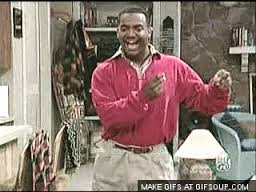
Maybe your niche is the Carlton. Originally filmed on The Fresh Prince of Bel-Air. Image from gifsoup.com

Maybe your niche is the Carlton. Originally filmed on The Fresh Prince of Bel-Air. Image from gifsoup.com

5. Experiment with styles. After failing miserably at musical theater dance, ballroom and Latin and just barely passing muster at club-standard “dancing”, I found my dance niche: swing. I have no idea what makes me like it so much. Maybe it’s the retro music; maybe it’s the innate courtesy of people who are drawn to swing dancing; maybe it’s just an excuse to wear a twirly skirt. I don’t know, but after a couple of lessons and dance socials I figured out that I’m weirdly good at it. The lesson here? Maybe you’re not bad at all dancing; maybe you’re just bad at most of it. You’ll never know until you try.

At Valentine’s Day

Over the past few weeks, a number of you have expressed a desire to know my relationship status. That number is zero, but I’m going to tell you anyway: currently I’m playing the field, which I define as letting Netflix and Ben & Jerry’s ice cream battle over my affections. I’m pretty happy with the way things are now; in fact, I’m using a date with both of them as an incentive to finish writing this post. I find they’re less demanding and infinitely less stressful than any alternative company could be.

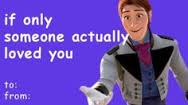
If Valentines were honest... and Disney-related. I didn't make it, someone on Tumblr did.

If Valentines were honest… and Disney-related. I didn’t make it, someone on Tumblr did.

Still, there are times when being single stings a little. For a lot of people, one of those times is Valentine’s Day. From early January until practically March, stores are covered in little red hearts and naked angels in diapers. Friends who are in relationships get disgustingly happy and gush to you about their plans for the Ides of February while you sip idly on your caramel macchiato and try not to look like you’re wondering what color to paint your nails next. ABC Family takes a break from its obsession with Harry Potter weekends and instead runs The Notebook on repeat for a week.

Of course, even with all the love in the air, being in a relationship around V-Day can sometimes feel like an arrow in the rear end. There’s SO much stress and pressure for everything about that day to be perfect for you and your sweetie, from the messages on the candy hearts (read: multicolored heart-shaped chalk) to the dinner to the outfits to the gifts (which of course MUST be either handmade or very, very expensive). Whether you’ve already paired off with someone or you’re still floating around in the world of “table for one, please”, you might think it would be easier and more pleasant for everyone if we just skipped straight from Thursday to Saturday next week and left it at that.

What do I think? Glad you asked: I think it’s silly to write off any excuse to celebrate. Maybe what we as a collective, frustrated, burned out culture should do about Valentine’s Day is just lower our expectations. Just take a deep breath and feel ‘em sink: your expectations for yourself, your expectations for your significant other (if you have one) and your expectations for the day overall. It won’t be perfect… but it can still be fun.

What is not sucking? Not sucking is defined in the world of celebrating Saint Valentine’s Day in the United States as having an overall positive 24 hours while letting the most important people in your life know that you love them.

1. If you’re in a relationship, do something special. Do something out of the norm for the two of you. If you normally hang out with Netflix and some popcorn in pajamas, dress up and go out somewhere fancy; if you’re party animals, stay in for a candlelit dinner and some snuggling. Breaking out of your usual mold will create memories and inject some novelty into your time together (which, as any married couple will tell you, is absolutely necessary in a healthy long-term relationship). If you and your boyfriend/girlfriend/partner aren’t exactly the “If you’re a bird, I’m a bird” type, don’t worry; there’s no Valentine’s Day higher authority that will punish you for going out rock climbing or hosting a two-person Sherlock marathon instead of filling your day with hearts and flowers. If you truly believe in your heart that Valentine’s Day was a holiday invented by greeting card companies to make money (which it wasn’t… look it up), then really surprise your sweetie by making special date plans on February 15th. Who could possibly see that coming?

2. If you’re not in a relationship… do something special. So you don’t have a boyfriend/girlfriend/partner. So what?Valentine’s Day is a celebration of love, and as much as romantic love is an important part of life, other kinds of love are just as essential, if not more so. If you’re doing Valentine’s Day solo, make some time for friends or family members. This applies to those of you in relationships, too; don’t get so far into the honeymoon bubble that you forget to remind the other people you interact with that you care about them. If all your friends are busy on Valentine’s Day, borrow from Leslie Knope and have brunch with them on the 13th or post an e-card on their Facebook page (best-friend sappiness optional). You can even show some love to your mom (and maybe win a prize!) by entering a fun little contest (NOT SPONSORED BY ME) here.

Leslie takes all her lady friends out to brunch on February 13th... Ever thought of doing the same? Gif taken from rebloggy.com.

Leslie takes all her lady friends out to brunch on February 13th… Ever thought of doing the same? Gif taken from rebloggy.com.

3. Don’t make it weird. American culture attaches a lot of expectations to February 14th: if you buy into the hype, it has to be romantic, it has to be sappy, and above all it has to run exactly according to the expectations of everyone involved. That’s why taking big steps like going out on a first date, making a relationship “official”, losing something important and self-defining (like your car keys!) or getting engaged on Valentine’s Day can get really awkward, really fast. One or both people involved might feel pressured to make a commitment they’re not ready for if they make the Big Decision on an emotionally loaded holiday. If you’re thinking about moving your relationship with somebody to the next level, do yourself a favor and either ask well before V-Day (read: TODAY) or just wait until February 20th. It’ll save you from discomfort, potential heartbreak and eye-roll-worthy cliché.

4. Relax. Remember what I said up there about cultural expectations? Yeah, they’re not real. Really. Yes, Valentine’s Day is a great excuse to get mushy and have fun, but it doesn’t need to be perfect. Forgetting to make reservations, giving your partner of two years a gift card because you ran out of time to make something nice, accidentally-on-purpose wearing heels so you’re four inches taller than your date (or, conversely, going on a date with someone who is wearing heels that make her look four inches taller than you)? All fine. All significantly less than world-ending. All stuff that you’re going to laugh about later on. Just enjoy yourself.

5. Eat some chocolate. You deserve it. But if you’re gonna go for the expensive stuff, wait til February 15th–it’ll all be on discount.

I gotta go now, readers–I’m late for my group date on the couch. I want to hear about your Valentine’s Day plans, though! Leave a comment below, stop by the Facebook page or tweet @hownottosuckblg. Have a great week!